

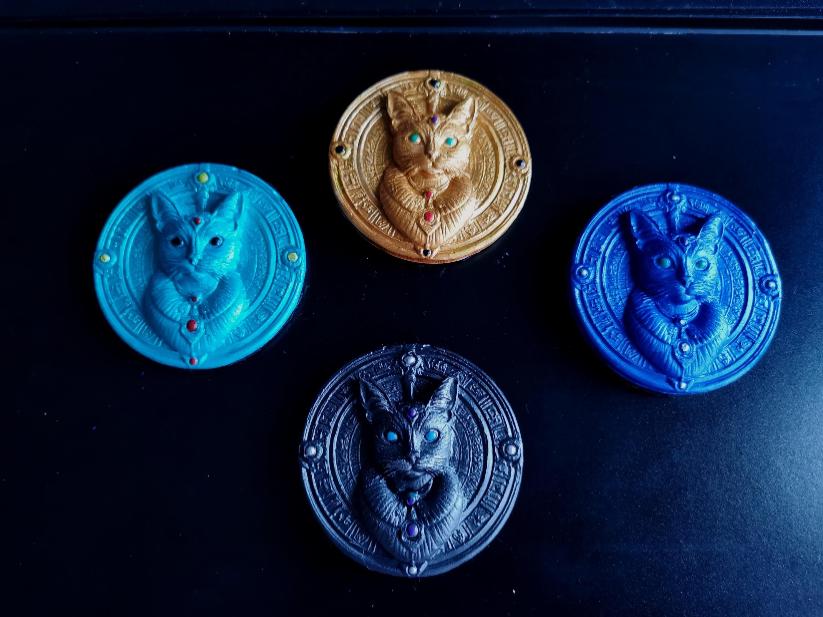
Guardian of the Home, Goddess of Joy, and Sacred Feline of Ancient Egypt Among the many gods and goddesses of ancient Egypt, few are as beloved—or as immediately recognizable—as Bastet. Often depicted as a woman with the head of a cat or as a sleek black feline, Bastet embodied warmth and ferocity, tenderness and protection, joy and sacred power. She was the goddess of home, fertility, music, dance, and pleasure, yet also a fierce defender against chaos and evil. To understand Bastet is to glimpse how the ancient Egyptians viewed balance, spirituality, and the sacredness of everyday life.
Bastet’s origins stretch back to Egypt’s earliest dynastic periods, around the third millennium BCE. In her earliest form, she was not the gentle household goddess we often imagine today. Instead, Bastet began as a lioness deity, much like her more fearsome counterpart Sekhmet. Early inscriptions portray her as a protector of the pharaoh and a warrior goddess associated with the sun god Ra. Over time, Bastet’s character softened. As Egyptian society became more settled and urban, her lioness form gradually transformed into that of a domestic cat. This shift reflected both changing cultural values and the increasing importance of cats in Egyptian life. Cats protected grain stores by hunting mice and snakes, making them vital to survival. As a result, cats came to symbolize safety, prosperity, and divine guardianship—qualities that Bastet herself came to embody. By the Middle and New Kingdom periods, Bastet had fully evolved into a goddess of the home, motherhood, and feminine grace, while still retaining her protective edge. She was no longer primarily a goddess of the battlefield but of daily life—watching over families, children, and communities.
The center of Bastet’s worship was the city of Bubastis, located in the Nile Delta. Bubastis was famous throughout Egypt for its grand temple dedicated to the goddess, as well as for its lively annual festivals. Ancient Greek historian Herodotus described these celebrations as some of the most joyful in Egypt, filled with music, dancing, feasting, and offerings. During these festivals, thousands of pilgrims traveled by boat along the Nile, singing, clapping, and playing instruments as they approached Bubastis. Wine flowed freely, laughter echoed through the streets, and devotion blended seamlessly with celebration. This fusion of spirituality and joy reflected Bastet’s nature: sacredness was not distant or solemn, but alive, embodied, and celebratory.
Bastet’s imagery is rich with symbolic meaning. As a cat or cat-headed woman, she represents independence, grace, and vigilance. Cats move effortlessly between rest and action, mirroring Bastet’s dual nature as both gentle and fierce. She is often shown holding a sistrum, a musical instrument associated with joy, ritual, and divine harmony. Another common symbol associated with Bastet is the aegis, a protective collar or breastplate often adorned with a lion’s head. This reminds worshippers that beneath her calm exterior lies formidable power. Bastet also carries associations with perfume, cosmetics, and beauty, reinforcing her connection to pleasure and sensuality—not as indulgence, but as sacred expressions of life.
Spiritually, Bastet represents balance. She embodies the idea that protection does not always roar; sometimes it purrs. Unlike gods who rule the cosmos or the afterlife, Bastet’s power resides in the intimate spaces of human existence: the home, the body, relationships, and emotional well-being. She was believed to ward off evil spirits and illness, particularly those that threatened women and children. Amulets bearing her image were worn for fertility, safe childbirth, and domestic harmony. In this role, Bastet became deeply personal—a goddess not just worshipped in temples, but welcomed into households. Yet Bastet was never passive. When angered, she could unleash destruction against forces of chaos. This aspect connected her to the myth of the “Eye of Ra,” in which she, or a closely related goddess, was sent to punish humanity. Bastet’s restraint and eventual return to gentleness symbolized the importance of self-control and balance between wrath and compassion.
Bastet’s influence elevated cats to a sacred status unlike any other animal in ancient Egypt. Killing a cat—even accidentally—was a serious crime, sometimes punishable by death. Families mourned deceased cats deeply, often mummifying them and burying them in special cemeteries dedicated to Bastet. These practices were not mere superstition. Cats were seen as living manifestations of the goddess’s presence. Their alert eyes, silent movements, and sudden bursts of energy made them seem touched by the divine. Through cats, Bastet was believed to walk among humans, offering protection and spiritual connection.
Today, Bastet continues to resonate with modern spiritual seekers, particularly those drawn to ancient Egyptian spirituality, goddess traditions, or animal symbolism. She is often invoked as a guardian of personal space, emotional boundaries, and self-care. In a world that often glorifies constant productivity and aggression, Bastet offers an alternative spiritual model—one that honors rest, joy, sensuality, and quiet strength. Many modern interpretations view Bastet as a symbol of feminine power that is neither submissive nor destructive. She teaches that softness and strength can coexist, that pleasure can be sacred, and that protecting one’s peace is a divine act.