

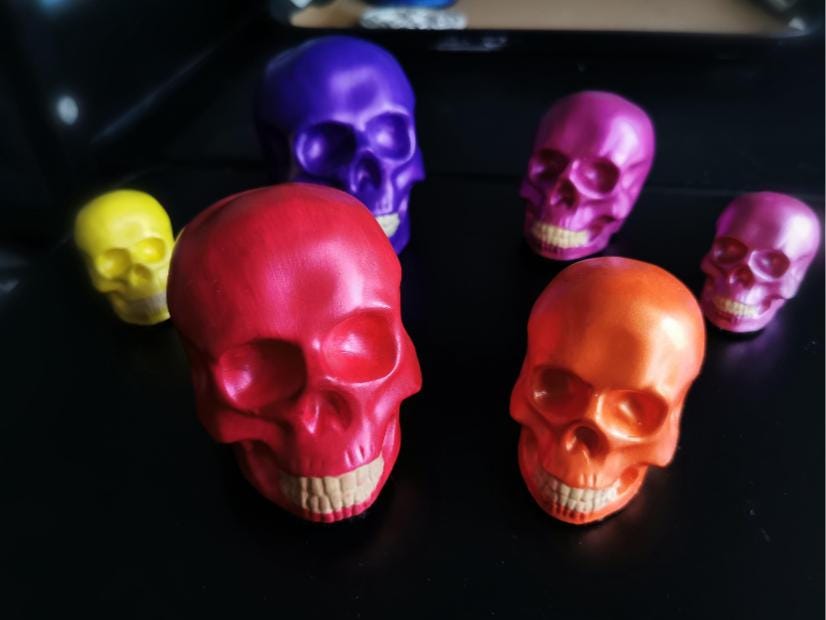
Few objects provoke as complex a reaction as the human skull. At once familiar and unsettling, it is unmistakably human, yet stripped of identity, expression, and voice. Across cultures and centuries, the skull has carried deep spiritual meaning, appearing in rituals, art, meditation practices, and sacred spaces. Far from being merely a reminder of death, the human skull has often been understood as a vessel of truth—a silent teacher pointing toward the deepest questions of existence. At its most basic level, the skull confronts us with mortality. It is what remains when breath, flesh, and personality have passed away. This starkness is precisely why it has been used spiritually: the skull leaves no room for illusion. In many traditions, spiritual awakening begins with the recognition that life is finite. By contemplating the skull, one is invited to let go of denial and distraction and to face the reality that all things born must die. This is not meant to inspire despair, but clarity. When the end is acknowledged, the present moment gains weight and meaning. In Buddhism, particularly in Tibetan traditions, skull imagery is common and purposeful. Monks have historically meditated in charnel grounds, surrounded by bones and skulls, to overcome fear and attachment. Ritual objects such as kapalas—cups made from human skulls—are used symbolically to represent the transformation of ignorance into wisdom. Here, the skull is not macabre; it is liberating. It reminds the practitioner that the self they cling to is impermanent, and that freedom comes from releasing that grip. Hinduism also engages deeply with skull symbolism. The goddess Kali, often depicted wearing a garland of skulls, embodies time, destruction, and rebirth. Each skull represents an ego conquered, an illusion dissolved. Kali’s imagery teaches that spiritual growth is not always gentle—it may require the death of old identities and false securities. The skull, in this context, is not an end point but a threshold, marking the passage from ignorance to insight. In Western Christian traditions, the skull has appeared in art and devotional practice under the motif of memento mori—“remember you must die.” Medieval monks sometimes kept skulls in their cells as aids to prayer. Paintings of saints like Jerome or Mary Magdalene frequently include a skull resting quietly nearby. Rather than glorifying death, these images emphasize humility and repentance. The skull levels all distinctions of wealth, power, and status. Before death, all crowns fall away. Indigenous cultures across the Americas, Asia, and Europe have also treated skulls as spiritually potent. In some traditions, the skull of an ancestor was preserved as a conduit between the living and the dead. The skull was believed to house memory, wisdom, or protective power. This belief rests on an intuitive truth: the skull once protected the brain, the seat of thought, identity, and perception. Even after death, it carries the resonance of a life once lived. This brings us to one of the skull’s most profound spiritual meanings: it is the container of consciousness. Within its curved walls arose imagination, love, fear, creativity, and prayer. Every story, idea, and belief a person held once echoed inside that bone. When we look at a skull, we are not just seeing death; we are seeing the former dwelling place of awareness itself. This recognition can inspire reverence rather than revulsion. The skull also symbolizes equality. Stripped of skin, hair, age, and expression, all skulls are remarkably similar. Race, gender, class, and beauty dissolve into shared structure. Spiritually, this sameness speaks to a deeper unity beneath surface differences. Many contemplative traditions teach that the ego thrives on distinction—“me” versus “you”—while wisdom recognizes common essence. The skull silently affirms this truth. In modern times, skull imagery often appears in countercultural or artistic contexts—tattoos, fashion, music, and design. While sometimes dismissed as rebellious or edgy, this resurgence reflects an enduring human need to grapple with mortality in a world that often avoids it. In societies that sanitize death and hide it away, the skull returns as a reminder of what has been forgotten. It asks uncomfortable questions: What matters? What lasts? Who are you beneath your roles? Importantly, the spiritual significance of the skull is not about obsession with death, but intimacy with life. When death is acknowledged, life becomes precious rather than trivial. Many spiritual teachers have noted that awareness of impermanence intensifies gratitude, compassion, and presence. The skull, in its stillness, invites us to live more fully while we can. There is also a quiet dignity to the skull. It does not plead or protest. It does not argue its importance. It simply is. In this way, it mirrors the spiritual ideal of surrender—accepting what is beyond control while remaining attentive and awake. The skull teaches without words, offering no doctrine, only truth. Ultimately, the human skull stands at the intersection of body and spirit, matter and mystery. It is both an object of bone and a symbol of transcendence. To contemplate it is to stand face to face with the limits of the self and the vastness beyond it. Whether seen in a monastery, a museum, a piece of art, or the quiet of one’s own reflection, the skull continues to serve as a profound spiritual mirror. It reminds us that life is brief, consciousness is precious, and meaning is something we must awaken to—before we, too, become silent teachers.
ChatGPT can make mistakes. Check important info. See Cookie Preferences.