

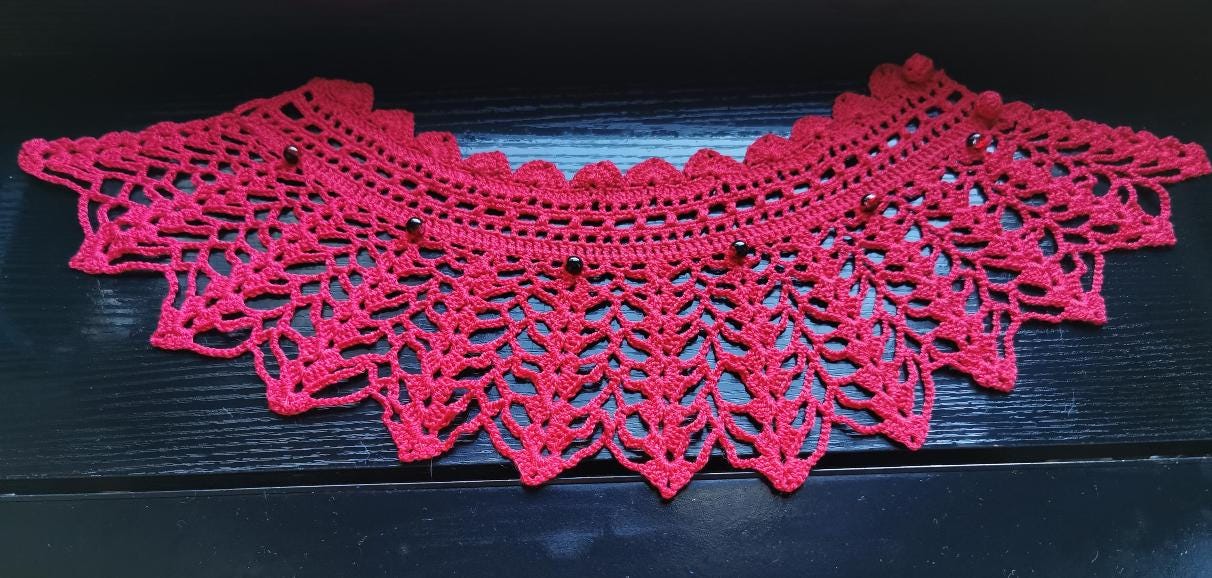
The earliest forms of chokers can be traced back thousands of years to ancient civilizations, where neck adornments served ceremonial, spiritual, and social purposes. In ancient Mesopotamia and Egypt, close-fitting necklaces made of gold, beads, shells, or precious stones were worn by both men and women. These adornments were not merely decorative; they symbolized wealth, divine protection, and social rank. In Ancient Egypt (c. 3000 BCE), broad collar necklaces known as wesekh functioned similarly to chokers in that they covered and emphasized the neck and collarbone area. Pharaohs and elite members of society wore these collars, often crafted from gold, lapis lazuli, turquoise, and faience. Egyptians believed jewelry possessed magical and protective qualities, and chokers were thought to guard the throat, a vulnerable and symbolically important part of the body associated with breath and life. Similarly, in ancient Sumerian culture, archaeological evidence shows close-fitting necklaces worn by royalty and priestesses. These items were often intricately designed and indicated power, authority, and religious significance.
Beyond ancient empires, choker-like necklaces appeared independently in numerous indigenous cultures worldwide. Native American tribes, particularly the Plains tribes such as the Lakota, Cheyenne, and Sioux, traditionally wore chokers made of bone hair pipes, shells, or beads. These chokers were often worn by warriors and held spiritual and social importance, symbolizing bravery, protection, and connection to ancestors. In Africa, various tribes incorporated neck rings and chokers into cultural dress. Among the Ndebele people of Southern Africa, layered neck rings signified beauty, marital status, and wealth. While not identical to modern chokers, these adornments share the same fundamental principle: emphasizing the neck as a site of identity and cultural meaning. In South Asia, chokers have been worn for centuries as part of traditional jewelry. Indian bridal chokers, often made of gold and gemstones, remain a staple of wedding attire. These chokers symbolize prosperity, femininity, and tradition, illustrating how the form transcended geography and evolved uniquely across cultures.
Chokers also held significance in Mesoamerican civilizations such as the Maya and Aztecs. Archaeological findings depict rulers and deities adorned with jade chokers, a material highly valued for its spiritual associations with life, fertility, and the cosmos. Jade chokers were often reserved for elites, reinforcing social hierarchy and divine authority. The placement of jewelry around the neck and throat was deeply symbolic, as the region was believed to be a channel between the physical and spiritual worlds. Thus, the choker functioned as both ornament and sacred object.
During the Middle Ages in Europe, jewelry styles shifted alongside changing social and religious values. While chokers were less prominent due to conservative dress norms emphasizing modesty, close-fitting neck adornments still appeared among the nobility. Embroidered collars, jeweled neckbands, and ribbons were sometimes worn beneath garments or as decorative elements. Neck adornment during this period often conveyed social rank rather than individual expression. Precious materials were restricted by sumptuary laws, which dictated who could wear certain fabrics or jewels. Thus, chokers and similar accessories became markers of class and privilege.
The Renaissance marked a renewed interest in art, beauty, and personal adornment. During this period, chokers re-emerged in European fashion, particularly among aristocratic women. Portraits from the 16th century frequently depict women wearing pearl or gemstone chokers, often paired with low-cut gowns that emphasized the neck and décolletage. One notable figure associated with the choker was Anne Boleyn, the second wife of King Henry VIII. She was famously portrayed wearing a black velvet choker adorned with a gold “B” pendant. This choker became a symbol of identity, status, and political power, demonstrating how neckwear could carry personal and symbolic meaning.
One of the most significant transformations in the choker’s meaning occurred during the late 18th century, particularly in France. Following the French Revolution (1789–1799), chokers took on a dark political symbolism. Red ribbon chokers became associated with the à la victime style, worn by women in remembrance of those executed by guillotine. The red ribbon symbolized the mark left by the blade on the neck. This period cemented the choker’s association with themes of mortality, resistance, and remembrance. Unlike earlier periods where chokers symbolized wealth or beauty, here they functioned as political and emotional statements.
The Victorian era (1837–1901) marked another major revival of the choker necklace. Queen Alexandra of Denmark, wife of King Edward VII, famously wore chokers to conceal a childhood scar on her neck. Her influence popularized the accessory among upper-class women throughout Europe. Victorian chokers were often made of velvet, lace, pearls, or diamonds and were associated with elegance, femininity, and refinement. However, they also reflected the era’s restrictive social norms. The choker, encircling the neck tightly, has been interpreted by some historians as symbolizing the constraints placed on women during this period. At the same time, chokers were sometimes linked to courtesans and performers, giving the accessory a dual reputation—both respectable and provocative depending on context.
In the early 20th century, chokers continued to evolve alongside changing fashion and social attitudes. During the 1920s, flapper culture embraced shorter necklaces and chokers, often layered with longer strands of pearls. These styles reflected modernity, liberation, and a break from traditional norms. Hollywood further popularized chokers, with actresses such as Audrey Hepburn and Elizabeth Taylor wearing elegant versions that reinforced the accessory’s association with glamour and sophistication.
The late 20th century saw the choker undergo a dramatic shift in meaning. In the 1980s and 1990s, chokers became prominent in punk, goth, and alternative subcultures. Leather chokers, spiked designs, and tattoo-style chokers symbolized rebellion, individuality, and resistance to mainstream norms. During this period, chokers were often associated with feminist expression, sexual autonomy, and youth identity. The accessory’s historical ties to control and constraint were reappropriated as symbols of empowerment.
In the 21st century, the choker has become a versatile and widely accepted fashion accessory. Designers regularly reinterpret chokers on global runways, using materials ranging from silk and metal to plastic and digital fabrication. Social media and celebrity culture have further accelerated choker trends, making them accessible to a global audience. Modern chokers no longer carry a single fixed meaning. Instead, they function as personal statements, blending historical references with contemporary aesthetics. The choker’s ability to adapt across time underscores its enduring appeal and cultural relevance.