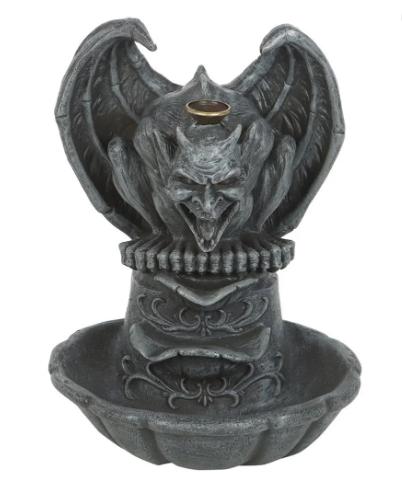
Gargoyles often seem mysterious or even sinister. They appear in fantasy novels, horror films, and gothic architecture as symbols of darkness. But historically, the gargoyle was never simply a monster. It was a deeply symbolic creation shaped by medieval spirituality, practical engineering, and humanity’s enduring struggle to understand the relationship between good and evil. The story of the gargoyle is therefore not just about architecture. It is about fear, protection, morality, imagination, and the spiritual meaning people have long attached to the unknown. The word “gargoyle” comes from the Old French gargouille, meaning “throat” or “gullet.” The term refers to the gargling sound made by water flowing through a spout. In the strict architectural sense, a gargoyle is a carved figure designed to channel rainwater away from the sides of a building. Water runs through the figure and exits through its mouth, preventing erosion of stone walls. Long before medieval Europe, ancient civilizations used decorative water spouts. The Egyptians, Greeks, and Romans all carved animal-headed drains into temples and public buildings. Lion-shaped spouts were especially common in classical architecture because lions symbolized strength and protection. However, the gargoyle as most people imagine it today emerged during the Middle Ages, particularly between the twelfth and fifteenth centuries, when Europe witnessed the rise of the great Gothic cathedrals. Buildings such as Notre-Dame de Paris, Chartres Cathedral, and Canterbury Cathedral became home to hundreds of elaborate stone creatures. The Gothic period transformed architecture into an expression of spiritual aspiration. Cathedrals rose higher than any buildings Europe had previously seen. Pointed arches, stained glass windows, and flying buttresses created structures that seemed to lift human consciousness toward heaven itself. In such buildings, every detail carried symbolic meaning, including the grotesque beings crouched along the rooflines. Before exploring the spiritual meaning of gargoyles, it is important to understand their practical role. Medieval cathedrals were constructed primarily from limestone and other porous stones that could easily be damaged by rainwater. Architects needed a way to move water away from the walls and foundations. The gargoyle solved this problem elegantly. Positioned at the edge of the roof, it projected outward so rainwater could flow through the sculpture and away from the building. This prevented water from streaking down the masonry and slowly eroding the structure. Interestingly, not every grotesque stone creature on a cathedral is technically a gargoyle. If the figure has no water-spouting function, it is more accurately called a “grotesque” or “chimera.” Yet in popular culture, the term “gargoyle” has come to describe all such monstrous carvings. This combination of utility and imagination reveals something important about medieval culture. Practical engineering and spiritual symbolism were not separate worlds. A water drain could also become a moral lesson, a warning, or a protective spirit. Medieval people often saw physical reality and spiritual reality as deeply intertwined. One of the greatest mysteries surrounding gargoyles is why religious buildings devoted to God displayed terrifying creatures on their walls. Why place demons, monsters, and grotesque faces on sacred spaces? Several explanations have emerged over the centuries. The most common interpretation is that gargoyles served as spiritual protectors. Their frightening appearance was intended to scare away evil spirits and demonic forces. In medieval Europe, belief in supernatural dangers was widespread. Disease, famine, war, and death were constant realities, and many people believed invisible spiritual powers influenced everyday life. The gargoyle acted as a symbolic guardian standing at the threshold between the sacred interior of the church and the chaotic outside world. It represented a force capable of confronting darkness with darkness. By embodying terrifying forms, the gargoyle warned evil that it could not enter holy ground. This idea has parallels in many cultures. Ancient Chinese temples used guardian lions. Japanese shrines displayed fierce protective spirits. Even in pre-Christian traditions, monstrous beings often guarded sacred places. Human beings have long imagined that the doorway between worlds requires protection. Another interpretation sees gargoyles as moral lessons. Medieval Christianity emphasized the reality of sin, temptation, and hell. Many churchgoers could not read, so cathedrals functioned as visual teaching tools. Sculptures, stained glass, and carvings communicated religious ideas through images rather than text. The grotesque appearance of gargoyles may therefore have symbolized the corruption of the soul when separated from God. Distorted faces and twisted bodies reflected spiritual disorder. Looking up at these creatures reminded worshippers of the dangers of greed, lust, pride, and other sins. In this sense, gargoyles served a psychological purpose. They externalized inner fears. They gave visible form to invisible anxieties about evil, death, and moral failure. Some historians suggest that gargoyles represented the untamed forces existing beyond the order of the church. Inside the cathedral there was symmetry, light, music, prayer, and divine harmony. Outside, there was unpredictability, violence, and temptation. The gargoyle marked the boundary between these worlds. This symbolic contrast reflected the medieval understanding of existence itself. Human life was seen as a struggle between spiritual order and worldly chaos. The cathedral became a model of the cosmos, with gargoyles occupying the unstable edge where darkness threatened the sacred center. Beyond historical interpretations, gargoyles continue to resonate because they speak to something deep within human psychology. Carl Jung, the Swiss psychologist, argued that human beings possess a “shadow self” — the hidden aspects of personality containing fear, anger, desire, and aggression. Societies often suppress these darker elements, yet they never disappear completely. The gargoyle can be understood as a symbolic expression of this shadow. It is ugly, frightening, and uncontrolled, yet it is not hidden away. Instead, it is placed openly on sacred architecture. Medieval culture may have unconsciously recognized that darkness cannot simply be denied; it must be acknowledged and transformed. In this interpretation, the gargoyle becomes spiritually meaningful not because it is evil, but because it reveals the necessity of confronting evil honestly. Religious traditions around the world often teach that spiritual growth requires facing one’s fears. The gargoyle embodies this confrontation. It stares outward into the darkness while remaining attached to a holy structure. It belongs neither fully to chaos nor fully to heaven. This liminal position gives the gargoyle much of its enduring power. The Middle Ages were filled with stories of dragons, demons, hybrid beasts, and supernatural encounters. Bestiaries — illustrated collections of animals both real and imaginary — circulated widely throughout Europe. These books described creatures such as griffins, basilisks, and manticores alongside lions and eagles, often attaching moral or spiritual lessons to each. Gargoyles emerged from this imaginative world. Many gargoyles combine human and animal features in bizarre ways: wings, claws, scales, elongated tongues, or distorted expressions. Some appear humorous rather than terrifying. Others look strangely sorrowful or contemplative. The freedom of medieval stone carvers played a major role in this variety. Craftsmen often invented creatures from their own imagination, local legends, or folk traditions. In some cases, gargoyles even reflected social satire. Drunken monks, arrogant nobles, and corrupt officials occasionally appeared in grotesque form carved into cathedral walls. Thus the gargoyle was not always solemn. It could also express humor, criticism, creativity, and artistic individuality. One famous legend associated with gargoyles comes from the French city of Rouen. According to medieval tradition, a dragon-like creature called La Gargouille terrorized the region by flooding rivers and devouring people. The beast was eventually defeated by Saint Romanus, a Christian bishop. After the creature was burned, its head and neck supposedly could not be destroyed by fire because they were too hardened by its own breath. These remains were mounted on a church wall as a warning and symbol of victory over evil. Some scholars believe this legend contributed to the development of gargoyle imagery. Whether historically true or not, the story captures an important spiritual theme: evil can be conquered and transformed into protection. The monster does not disappear entirely. Instead, it becomes part of the sacred structure itself. Although the great age of Gothic cathedral building ended centuries ago, gargoyles remain culturally powerful. During the nineteenth century, the Gothic Revival movement renewed fascination with medieval architecture. Architects restored old cathedrals and added new gargoyles to buildings across Europe and North America. Writers and artists also embraced gargoyles as symbols of mystery and melancholy. Perhaps the most famous literary example appears in The Hunchback of Notre-Dame by Victor Hugo, which portrayed the cathedral of Notre-Dame as a living spiritual world populated by haunting stone figures. In the twentieth and twenty-first centuries, gargoyles entered popular culture through films, comics, fantasy fiction, and television. They are often portrayed as ancient guardians who awaken at night to protect humanity. While these portrayals are fictional, they preserve the traditional association between gargoyles and guardianship. Modern audiences are drawn to gargoyles partly because they embody contradiction. They are monstrous yet protective, ugly yet beautiful, frightening yet strangely comforting. They remind us that human beings are rarely simple or pure. We are mixtures of light and shadow. The Deeper Spiritual Meaning Ultimately, the spiritual meaning of the gargoyle lies in its paradoxical nature. The gargoyle teaches that sacred spaces are not free from darkness. Instead, true spirituality recognizes darkness and transforms it. Evil is acknowledged, confronted, and placed at the service of something higher. This idea can be understood psychologically, morally, or religiously. Psychologically, the gargoyle suggests that denying fear only gives it greater power. Facing fear allows transformation. Morally, the gargoyle warns against arrogance. Human beings are capable of both goodness and corruption. The grotesque face carved in stone reflects uncomfortable truths about the human condition. Spiritually, the gargoyle symbolizes vigilance. It watches continuously from the margins, standing guard between chaos and order, between the earthly and the divine. There is also something profoundly compassionate hidden within the grotesque image. Gargoyles suggest that even what appears broken, ugly, or frightening can still serve a sacred purpose. The monstrous creature attached to the cathedral is not rejected entirely; it is integrated into the structure of holiness itself. This may explain why gargoyles continue to fascinate modern people living in a secular age. Even today, many individuals struggle with feelings of inner conflict, fear, guilt, or alienation. The gargoyle represents the possibility that darkness need not be erased in order for transformation to occur. Instead, the shadow becomes part of wisdom.
What are Gargoyles?